
Method
How to stop snoozing your alarm
Snoozing is not a character flaw. It is the rational response to a button that is easier to press than to think about, operated by someone who is not yet awake enough to think. Fix the button, not the character.
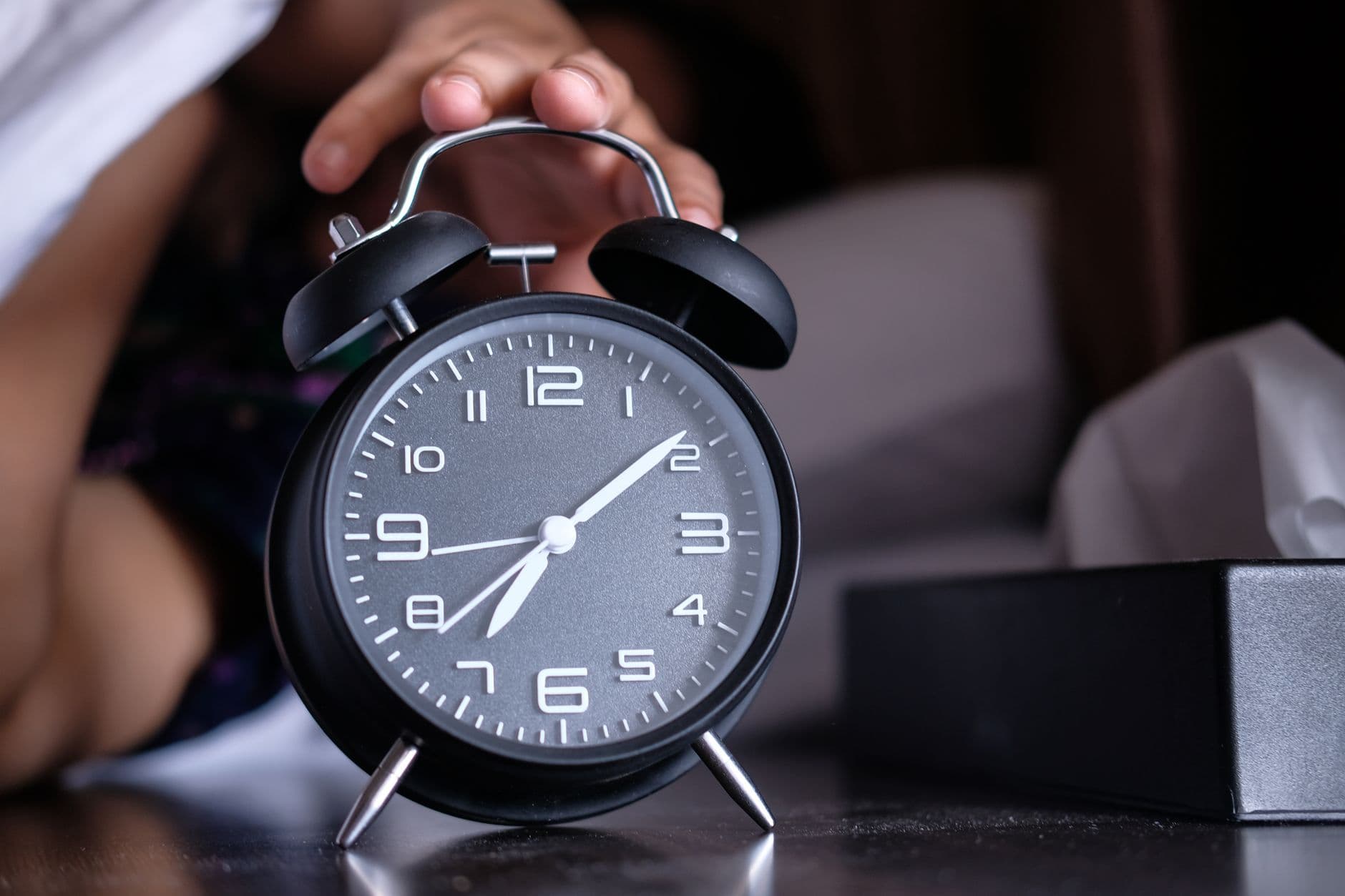
Why snooze wins every morning
The decision to snooze is made by a version of you with almost no capacity to weigh anything up. It happens within two seconds of waking, from a starting position of horizontal and warm, with one hand already in range of the button. No plan you make the night before is present at that moment.
So arguments about discipline are beside the point. What you are actually doing every morning is executing the easiest available action, and snooze is designed to be the easiest available action. The nine-minute gap that most snoozes default to is an accident of old clock mechanisms, not a considered interval — and nine minutes is rarely long enough to be restful sleep, so you get the cost of interruption without the benefit.
This means the fixes that work are environmental rather than motivational. Make the easy action something other than snooze, or make snooze unavailable, or make the alarm itself something you cannot dismiss without waking up properly. All three are things you set up once, in the evening, when you are capable of deciding.
Worth saying honestly: if you are snoozing every day and tired all day, the alarm may not be the problem. Persistent tiredness has causes that no amount of alarm design will address, and that is a conversation for a doctor rather than a settings screen.
Three different problems that look identical
They all present as "I keep snoozing", and they need different fixes.
You are not getting enough sleep
If you consistently need three alarms, the honest arithmetic is usually that you went to bed too late for the time you set. No alarm design fixes a sleep deficit; it only relocates the cost to later in the day. The fix here is the bedtime, not the morning.
You are waking at a bad point and going back under
You hear it, you dismiss it, and you are genuinely asleep again within a minute with no memory of the alarm. This is the case where physical distance from the phone does more than any setting.
You are awake and choosing not to get up
You know exactly what you are doing and you do it anyway, because nothing in the next ten minutes is pressing. This one is about what is waiting for you, and it responds to changing the morning rather than the alarm.
The fixes, in order of how reliably they work
Start at the top. The first two are worth more than everything below them combined.
Put the alarm out of reach
Across the room, on a shelf, anywhere that requires standing up. This is the oldest advice there is because it is the only fix that removes the possibility of a decision made while horizontal. Once you are vertical, the argument is over.
Set one alarm, at the real time
The three-alarm routine trains you to ignore the first two, and the first two are the ones at the time you actually wanted. Set one, at the time you genuinely need to be up, and let it mean something. This feels risky for about four days.
Turn snooze off, or cap it
If your app lets you, set snooze to off for the morning alarm specifically. Timelee sets snooze per reminder rather than globally, and one of the options is Off — so the alarm that must not be snoozed cannot be, while everything else keeps a normal snooze.
Change the tone every few weeks
You learn to sleep through a familiar sound surprisingly quickly. Timelee has 33 tones in six groups — alarm, ringtone, classic, music, nature, animals — and rotating through them every month or two keeps the alarm unfamiliar enough to register.
Use a channel that is not a snooze button
An in-app call rings full screen like an incoming call, which requires the deliberate action of rejecting a call rather than a blind tap in the right area of the screen. For the mornings that genuinely matter, a real phone call placed to your verified number is harder still, because it is not the alarm app at all.
Turn on nag for the alarm you keep beating
Timelee's nag setting, Pinch Me, re-rings on an interval instead of once. The every-minute setting continues until you mark the reminder done, which makes going back to sleep a considerably more active choice than pressing snooze.
Put something in the first five minutes
Getting up is easier when there is a specific next action rather than an open morning: the kettle, the shower, the dog, clothes already out. The decision you want to make easy is the first action, not the alarm.
Snooze is a setting, not a reflex
Most apps treat snooze as one global behaviour. Timelee sets it per reminder: 5, 10, 15 or 30 minutes, 1 hour, 3 hours, a day, a custom number of minutes — or Off. Auto snooze re-rings a set number of times on its own and then stops. That per-reminder control is the point: your 06:00 alarm can refuse to be snoozed while your afternoon stretch reminder still gets a normal ten minutes.
What to change tonight
- Move the phone or clock out of arm's reach before you get into bed.
- Delete the two decoy alarms and keep the one at the real time.
- Set snooze to off for that alarm, or cap it at one.
- Change the tone to one you have not heard for months.
- Decide the first physical action of the morning and make it possible — clothes out, kettle filled.
- Work out what time you would actually have to be asleep to get enough, and treat that as the thing being set.
- Test the alarm once with the phone in the state it will be in, especially if you sleep with do-not-disturb on.
The part most advice leaves out
A better alarm cannot manufacture sleep. If you are going to bed at 01:00 and setting an alarm for 06:00, the alarm is not the constraint and no amount of escalation will make the morning pleasant — it will only make it louder.
So treat the bedtime as the thing being scheduled. A reminder an hour before you want to be asleep, set for the moment you would need to start winding down rather than the moment you want to be unconscious, does more for your mornings than anything on the alarm side. It is also a much easier reminder to obey, because you are awake when it arrives.
The second thing worth saying is that escalation should be reserved. If you put a phone call on your ordinary weekday alarm, within a fortnight it will be as ignorable as everything else, and you will have spent the one channel that still works. Keep it for the 04:30 flight and the shift you cannot be late for, and let the ordinary Tuesday be an ordinary alarm across the room.
Change two things tonight
Move the phone out of reach and delete the decoy alarms. If that is not enough by the end of the week, turn snooze off on the one that is left.
Keep reading
- Snooze settingsPer reminder, including Off.
- Alarm reminders33 tones, and an alarm rather than a notification.
- Alarm apps comparedWhen an alarm app is the right tool, and when it is not.
- Timelee and AlarmyAn alarm clock and a reminder app, side by side.
- A reminder that wakes you upWhat to do when you never hear it in the first place.