
Use case
Reminders for the person doing the caring
You are holding two sets of everything. Your own week, and someone else's — their doses, their appointments, their repeat prescription, the form that has to go back before the 14th. Nobody else is tracking the second set, which is why it lives in your head at two in the morning.
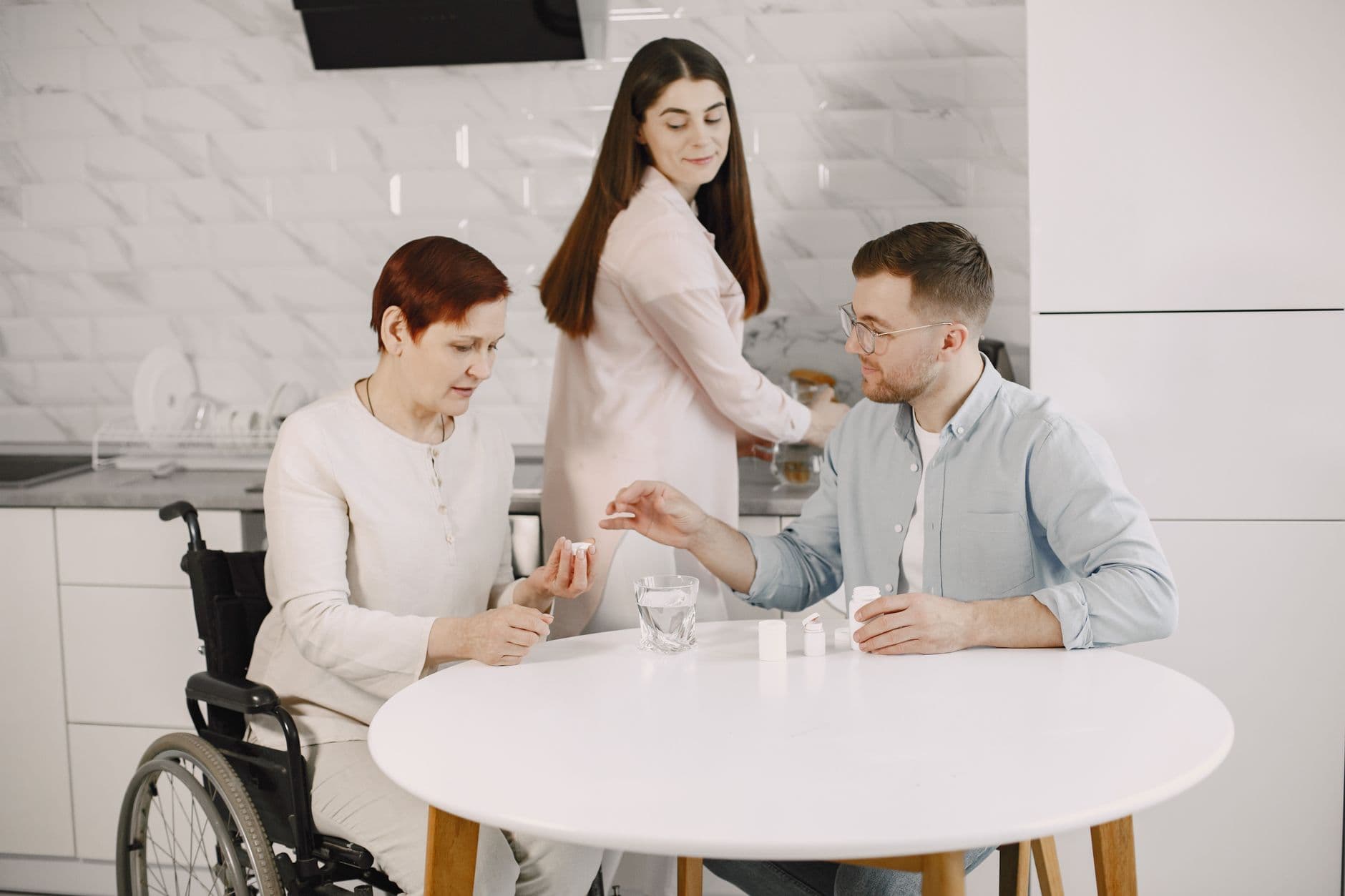
The load is not the tasks. It is being the only copy of the list
A caregiver reminder app is usually sold as a way to organise someone else. That is the smaller half of the problem. The larger half is that you are the single point of failure for a list nobody else can see, and you cannot put it down.
It is not that any individual item is hard. The 14:00 dose is not hard. The repeat prescription is not hard. What is hard is that there are forty of them, they belong to two households, they arrive from three directions, and if you drop one there is no second person who notices.
So the useful question is not how to be more organised. It is which parts of that list can stop living in your head, and which parts can stop being your job to deliver at all.
The things worth moving out of your head first
- Every medication time, including the ones you currently remember because you are in the room
- Repeat prescription ordering, which has a lead time and is easy to leave two days too late
- Appointments, and separately the transport or the person who is taking them to it
- The pre-appointment jobs — fasting, a sample, a list of current medicines, a form filled in
- Benefits, assessments and reviews, with a five-hour pre-alarm on the day the paperwork is due
- The equipment and delivery dates that come round monthly and nobody confirms
- Your own appointments, which are the first things a carer drops
- One recurring reminder to ask for help with something specific, on a day you choose
A dose is a different kind of reminder from a task
A medication reminder in Timelee holds the medicine's name, type, colour and a photo of the actual box, the dose per time, and several times a day — with Morning, Noon, Afternoon, Evening and Night presets or your own. Repeat it daily, on chosen weekdays, or monthly.
The photo matters more than it sounds. At 06:00, or in a stranger's kitchen while covering for you, the box in the picture is faster and safer than a name on a label.
Use Repeat ends for a course rather than a standing prescription: after a set number of repeats for a ten-day course of tablets, or after a date. Nothing keeps ringing for a medicine that finished last month.
- Dose count and a photo of the box, so the right tablet is identifiable at six in the morning
- Several times a day on one medication reminder, not one reminder per dose
- Completed doses land in History, which is a plain record of what was taken and when

You should not have to be in the room for the 14:00 dose to happen.
A reminder that calls their phone directly does the part you were doing by being physically present. That is one fewer thing tied to your location at two in the afternoon.
You cannot point a call at someone who has not agreed
Before Timelee will ring any number, its owner confirms it with a one-time code sent to that number. That applies to a relative's phone exactly as it applies to your own. In practice it means the setup is a five-minute conversation with them rather than something you can do behind their back, which is the right way round.
Questions carers ask
Can I set reminders on my phone that ring on theirs?
Yes, in two ways. If they use Timelee, share the reminder and it arrives on their phone for them to accept or decline. If they do not use apps at all, use a Phone Call Only reminder pointed at their number and Timelee's servers will ring them at the time you set. Their number has to be verified with a one-time code first.
Will I know whether they actually took the dose?
You will know whether the reminder was acknowledged and marked done, and that record stays in History. Timelee cannot see whether a tablet was swallowed, and no reminder app can. It is an honest prompt and a log, not supervision.
What happens if they do not answer the call?
Nothing further is placed for that reminder. The escalation ladder runs the rungs you chose, in order, and then stops. If you need to know about a missed dose, set the same reminder for yourself a few minutes later so the question reaches you too.
Can more than one family member see the same reminders?
You can share individual reminders with a person, or group people into a team and assign work to a member. Each shared reminder is accepted or declined, so you can tell the difference between something you sent and something somebody took on.
Is this suitable for someone with dementia?
That depends entirely on the person, and it is a judgement for you and their clinical team rather than for us. What Timelee provides is a spoken phone call to a familiar handset, which asks less of someone than a smartphone notification does. It is not a monitoring system, an alert service or a substitute for care.
What does it cost to use it for someone else?
Reminders, repeats, medication reminders, sharing, categories and the web dashboard are part of the free core. Real phone calls use call credits, bought in the Timelee app on Android or iPhone. Current figures are shown in the app.
Start with the doses and the prescription lead time
Those two cover most of the three-in-the-morning list. Everything else can go in over the following week.
Keep reading
- Shared remindersHand something over and see whether it was taken.
- Medication remindersMedicine, dose, times of day, and a photo of the box.
- Caring for an older relativeA call that needs no app at the other end.
- Carer reminder checklistWhat to set up in the first week.
- Phone call remindersRing a verified number at the time you set.
- Remembering today's doseThe everyday job, as distinct from sticking to a long course.